







People of the Books
Ex Libris from the Museum’s Collection
-
 June 4 2026
 Curators: Vicky Leiderman, Ronit Sorek
Assistants to the curators: Loti Gombosh, Yaacov Polak-
Designer: Eli Ben Arye
-
 Axel Springer Art and Archaeology Library
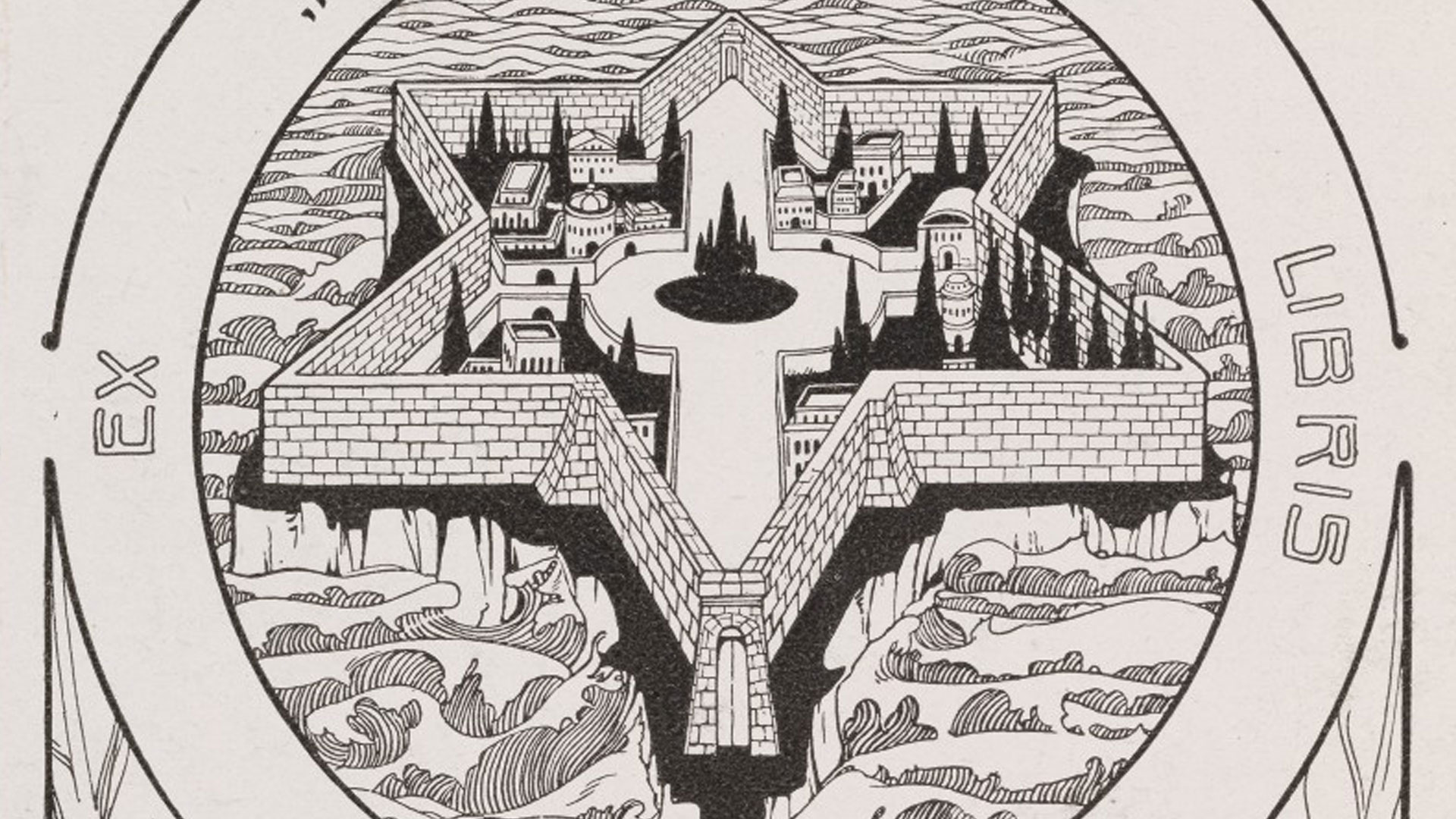
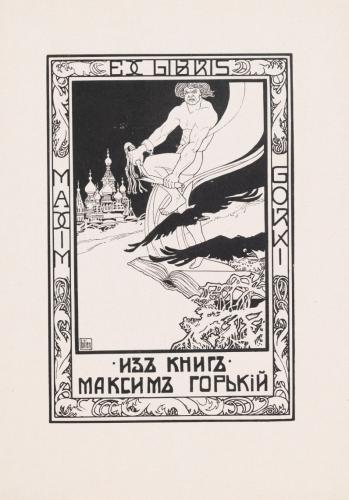
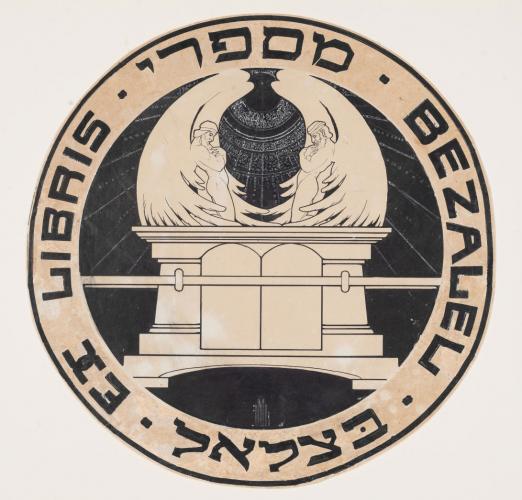
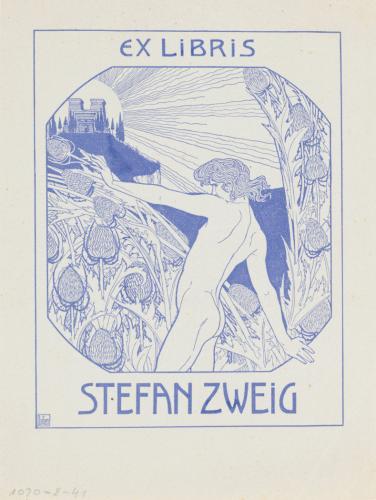
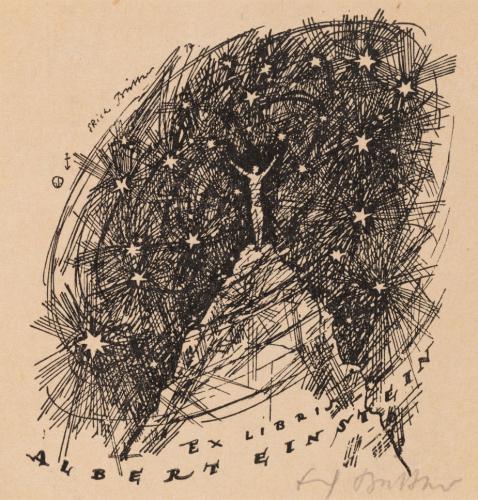
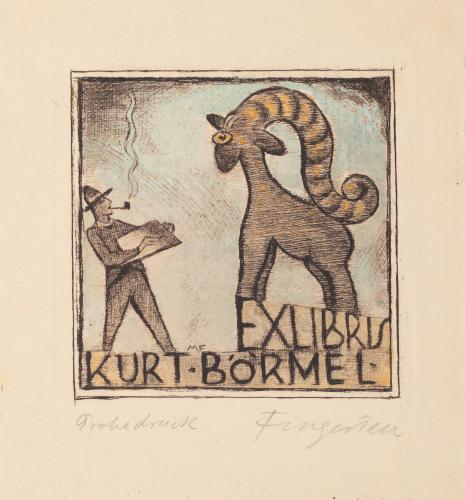
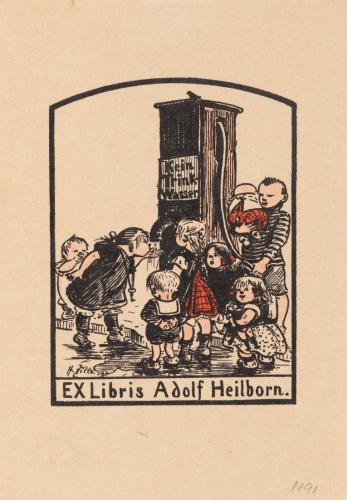
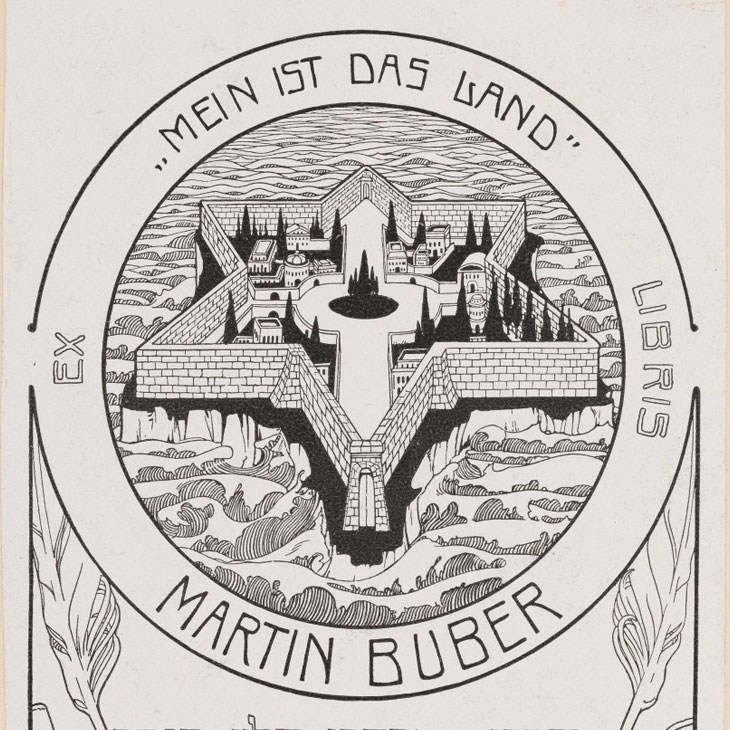
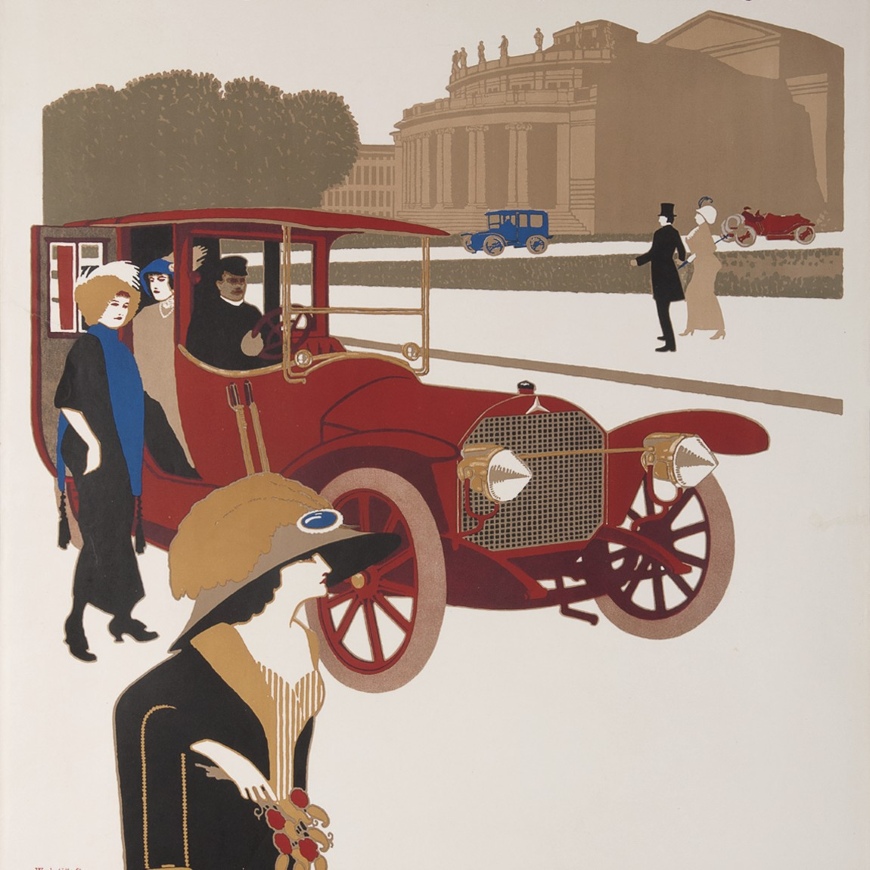
A bookplate (or “ex libris,” meaning “from the books/ library of” in Latin) is a mark of ownership pasted inside a book’s cover. It typically includes the owner’s name, a symbolic illustration, and sometimes also a motto. The predecessors of bookplates can be traced all the way back to ancient Egypt, where ceramic plaques were affixed to boxes containing papyrus scrolls. During the Middle Ages the use of bookplates was widespread in monasteries and among the nobility, and after the print revolution of the mid-15th century, bookplates emerged as a popular graphic art form, reaching its heyday in the 19th through the mid-20th century. With the rise of the middle class and greater prevalence of libraries in private homes, bookplates became a means of personal expression capturing essential aspects of the library owner’s life, particularly in Christian bookplates, while bookplates prepared for Jewish book owners tended to emphasize religious or Zionist symbols.
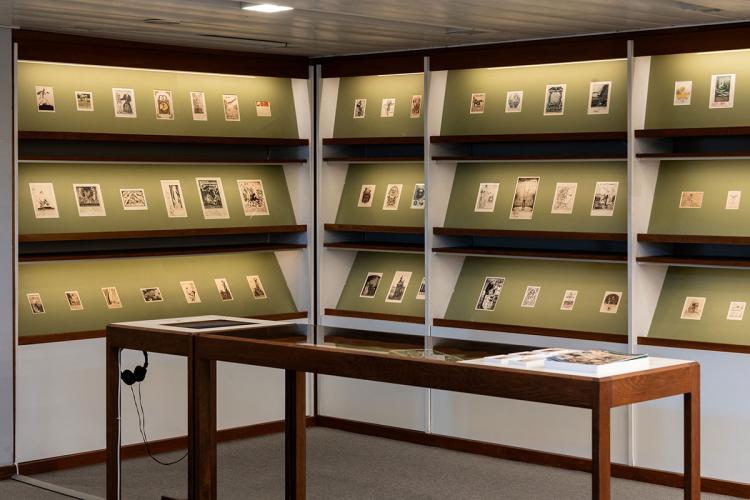
Bookplate designs are the product of a collaboration between an artist and a patron (the library owner). The earliest examples were created by leading artists, including the German Renaissance master Albrecht Dürer, and over time amateur artists also began producing bookplates. The latter generally didn’t sign their work, often owing to the small scale of the plates. Bookplates were initially made using traditional print techniques, and as libraries expanded, replicas of the original prints were made in order to generate additional copies. Ex libris culture came to Israel too, and there have been two local exhibitions on the subject – in 1956 initiated by the Jerusalem Print Workers Association, and in 1994 at Ben-Gurion University of the Negev. The present exhibition displays for the first time the Israel Museum’s extensive bookplate collection, which originated at the Bezalel National Museum and is the largest in the country. Its core is composed of the collection of the German industrialist Emil W. Netter, which reached the Museum in 1936. The sheer scope of the entire collection – approximately 15,000 items – testifies to the importance of books in the local culture, and there is therefore no better place than the Museum Library to display this selection from it. The exhibition is presented as a series of chapters, illuminating the wide variety of themes that characterize this multifaceted field.
Please note: The exhibition is open to the public during the library's opening hours:
Monday, Wednesday, Thursday | 10 am - 4 pm
Tuesday | 4 pm – 8 pm
On Thursdays, September 3 and 10, the library will be open from 10 am to 6 pm
The library will be closed during Sukkot week


 Sep 01Sep 08Sep 15Sep 22Sep 29Sep 29Sep 29
 Aug 18Aug 18Aug 21Aug 22Aug 25Aug 25Aug 28Aug 29Sep 01Sep 04Sep 05Sep 08Sep 15Sep 18Sep 19Sep 22
 Sep 01Sep 08Sep 15Sep 22
 Aug 19Aug 20Aug 24Aug 26Aug 27Aug 31Sep 02Sep 03Sep 07Sep 09Sep 10Sep 14Sep 16Sep 17Sep 23Sep 24Sep 27Sep 29Oct 01
 Aug 19Aug 24Aug 26Aug 31Sep 02Sep 07Sep 09Sep 14Sep 16Sep 23Sep 28Sep 30
 Sep 02Sep 03Sep 07Sep 09Sep 10Sep 14Sep 16Sep 17Sep 23Sep 24Sep 27Sep 28Sep 29Sep 30Oct 01
 Aug 20Aug 27Sep 03Sep 10Sep 17Sep 24
- Aug 20Aug 27Sep 03Sep 10Sep 17Sep 24
- Aug 20Aug 27Sep 03Sep 10Sep 17Sep 24
 Aug 20Aug 27Sep 03Sep 10Sep 17Sep 24
 Sep 27Sep 27Sep 29Sep 29Oct 01Oct 01
 Sep 27Sep 27Sep 27Sep 28Sep 28Sep 28Sep 29Sep 29Sep 29Sep 30Sep 30Sep 30Oct 01Oct 01Oct 01
 Sep 27Sep 28Sep 29Sep 30Oct 01