







Francisco Goya
Masterworks on Paper from The Israel Museum Collection, Jerusalem, At the Hermann Struck Museum, Haifa
-
 September 18 2014 - January 25 2015
 Curators: Svetlana Reingold, Irena Gordon
-

- : Francisco Goya
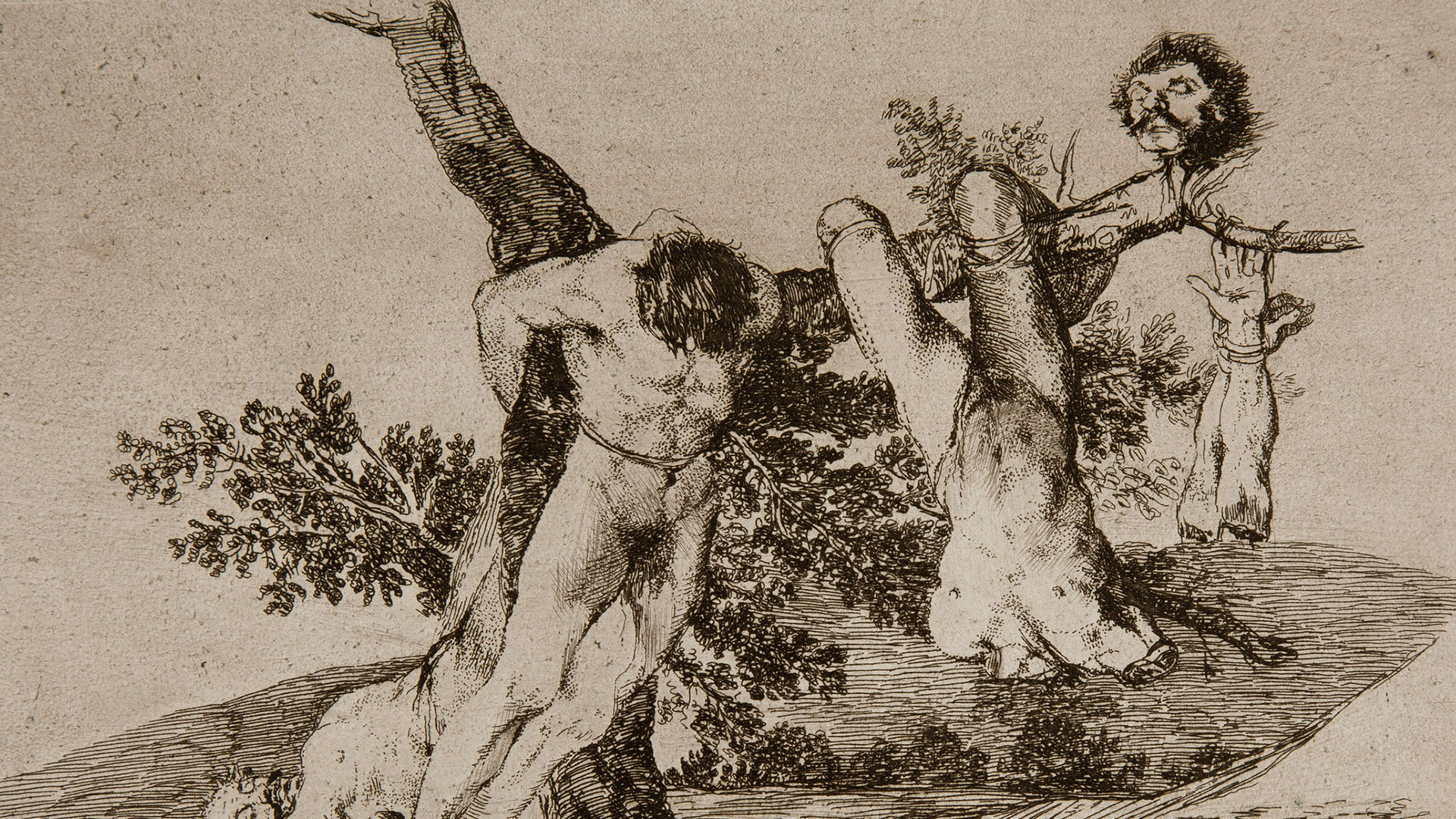
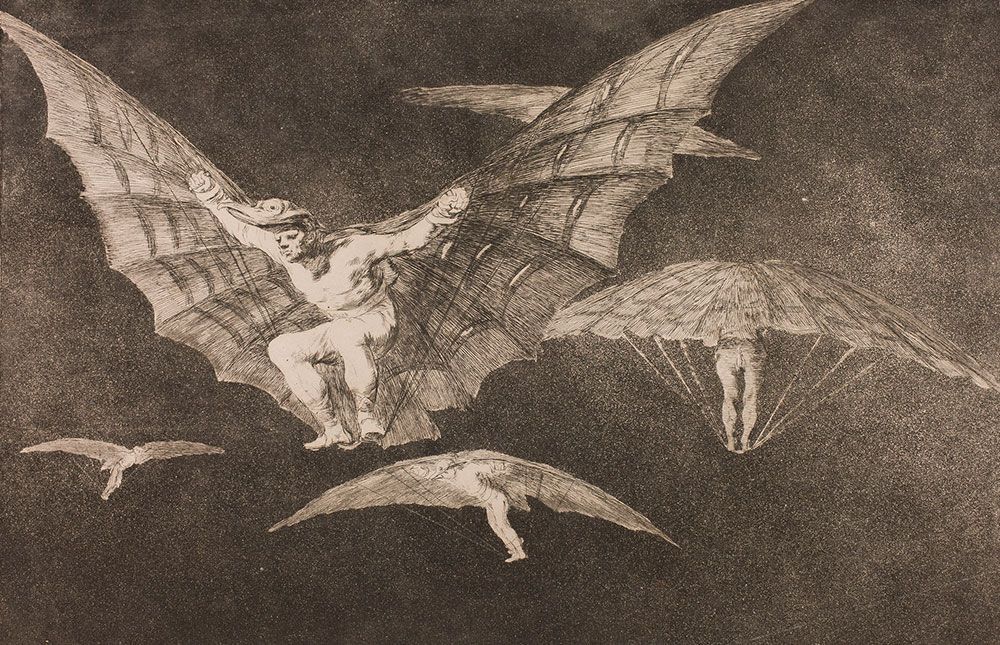
The Spanish artist Francisco Goya (1746 – 1828) belongs to a tradition of painters-engravers that began in the Renaissance with Mantegna, Dürer and Parmigianino and continued into the seventeenth and eighteenth centuries with Rembrandt, Ribera, Piranesi and Tiepolo. Living and working in the transition period between Neo-Classicism and Romanticism, Goya’s prints have had, like his paintings, a decisive influence on generations of artists from the nineteenth century to the present. Goya was court painter to the kings of Spain and worked under patrons in keeping with the artistic conventions of his time. However, in the last two hundred years he has been identified as an artist who paved innovative artistic ways through the language of his prints and of his paintings. Moreover, he has been recognized as a paradigmatic representative of the modern existential condition. Using the aquatint technique in a groundbreaking manner, alongside other printmaking techniques, Goya created an oeuvre of 290 prints. Included in these are four main etching series of unparalleled expressive intensity, both compositionally and in the subversive usage of the captions that accompany them. The first series, “Los Caprichos” (The Caprices), published in 1799, dealt with social and political critique. This rare exhibition in Israel presents 70 works from the three later series: “Los Desastres de la Guerra” (The Disasters of War), “La Tauromaquia” (The Bullfights) and the entire series of “Los Proverbios” (The Proverbs). In 1810 Goya began the creation of “The Disasters of War”, following France’s invasion of Spain in 1808 and the Spanish popular uprising against the French occupation. The works are an unprecedented presentation of a realistic, non-glorifying and uncompromising moral response to human suffering and to the barbarism of war, through a combination of imaginary, metaphorical and allegorical dimensions. “La Tauromaquia”, published in 1816, deals with the Spanish national sport of bull fighting. It focuses on the struggle between life and death while confronting the very act of spectatorship. “The Proverbs”, which Goya created in the last decade of his life, was based on well-known Spanish proverbs, and presents the most extreme and mysterious chapter of his series of prints The images that appear in these series exhibit the highest form of excess: cycles of cruelty, massacre and brotherhood, circuses of flying and falling, magic and brutalization, monstrosity mixed with passion and stupidity, progress thrown together with folklore and superstition, reason and madness, and an exchange of roles between man and beast. This is a carnivalesque chaos characterized by an utter lack of hope and redemption. The dream that lies within reality, the disintegration, the ambiguity, the suspension of unified time and space, the surfeit and the reversal of orders – these characteristics at the heart of Goya’s graphic works challenge simplistic notions of representation and truth. They force the viewer to acknowledge an ambivalent consciousness unencumbered by conceptions, expressing the modern existential condition of the shattered, the fragmented and the deficient that make up the “beautiful” in art. Thus, it would seem that looking at these works here and now, in Israel 2014, is not a historical and detached encounter but rather a thrilling and more relevant experience than ever. This exhibition has been made possible through collaboration with The Israel Museum, Jerusalem. Our special thanks to Ms. Ronit Sorek, curator of the Department of Prints and Drawings at The Israel Museum, thanks to whom this exhibition came to be.


 May 14May 18May 25May 28Jun 01Jun 04Jun 10Jun 11Jun 15Jun 17Jun 18Jun 22Jun 24Jun 25Jun 29
 May 21May 28Jun 04Jun 11Jun 18Jun 25
- May 21May 28Jun 04Jun 11Jun 18Jun 25
- May 21May 28Jun 04Jun 11Jun 18Jun 25
 May 28Jun 04Jun 11Jun 18Jun 25
 May 18May 25May 28Jun 01Jun 04Jun 10Jun 11Jun 15Jun 17Jun 18Jun 22Jun 24Jun 25Jun 29
 May 15May 16May 19May 21May 23May 26May 29May 30Jun 02Jun 05Jun 06Jun 09Jun 12Jun 13Jun 16Jun 19Jun 20Jun 23Jun 26Jun 27Jun 30
- May 16May 23May 30Jun 06Jun 13Jun 20Jun 27
 Jun 20Jun 22Jun 29Jun 30Jul 01Jul 04Jul 07
 Jun 21
 May 18May 25Jun 01Jun 10Jun 15Jun 17Jun 22Jun 24Jun 29
 Jun 15Jun 22Jun 29