







JavaScriptorium
-
 September 14 2006 - September 26 2013
 Curators: Dr. Adolfo Roitman, Dr. Susan Hazan
-

- : Ariel Malka
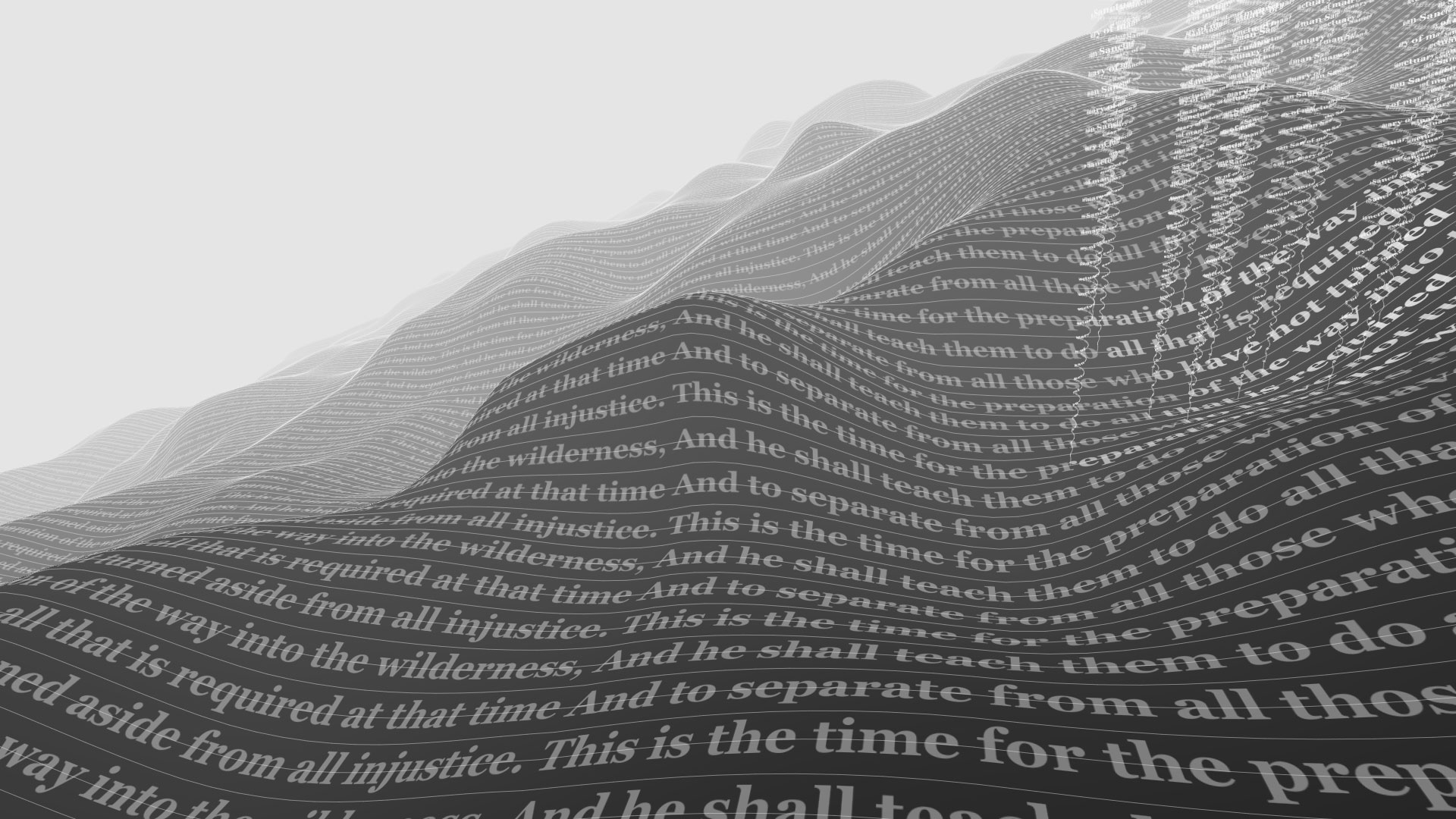
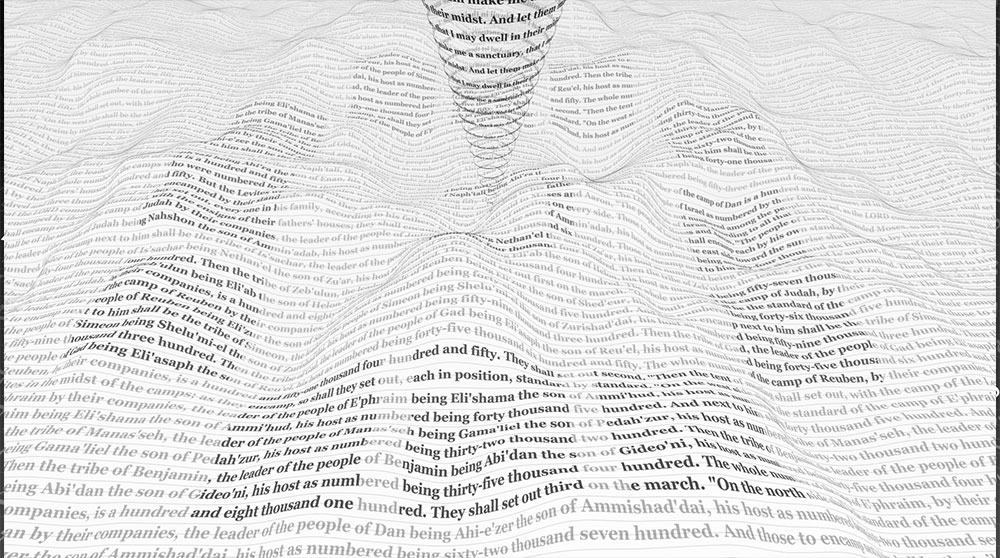
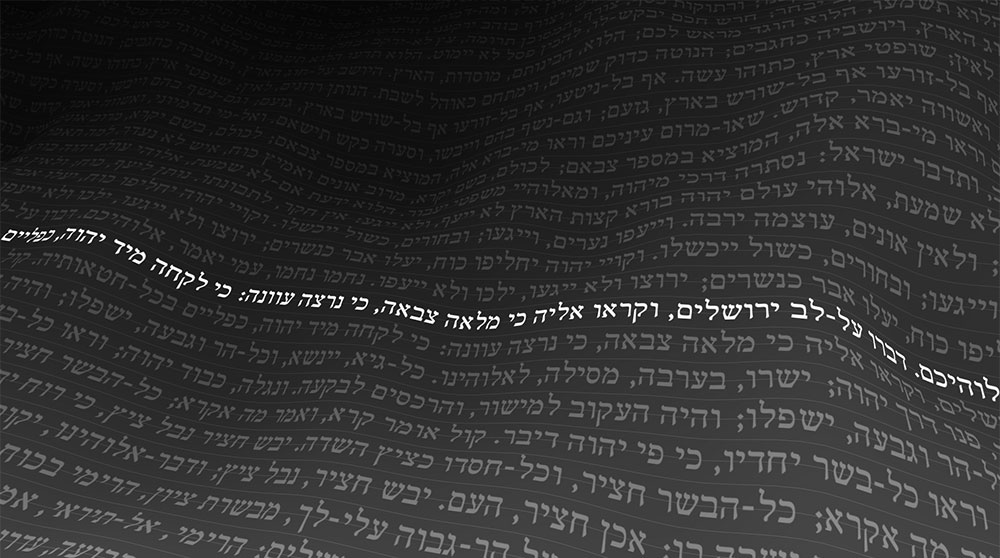
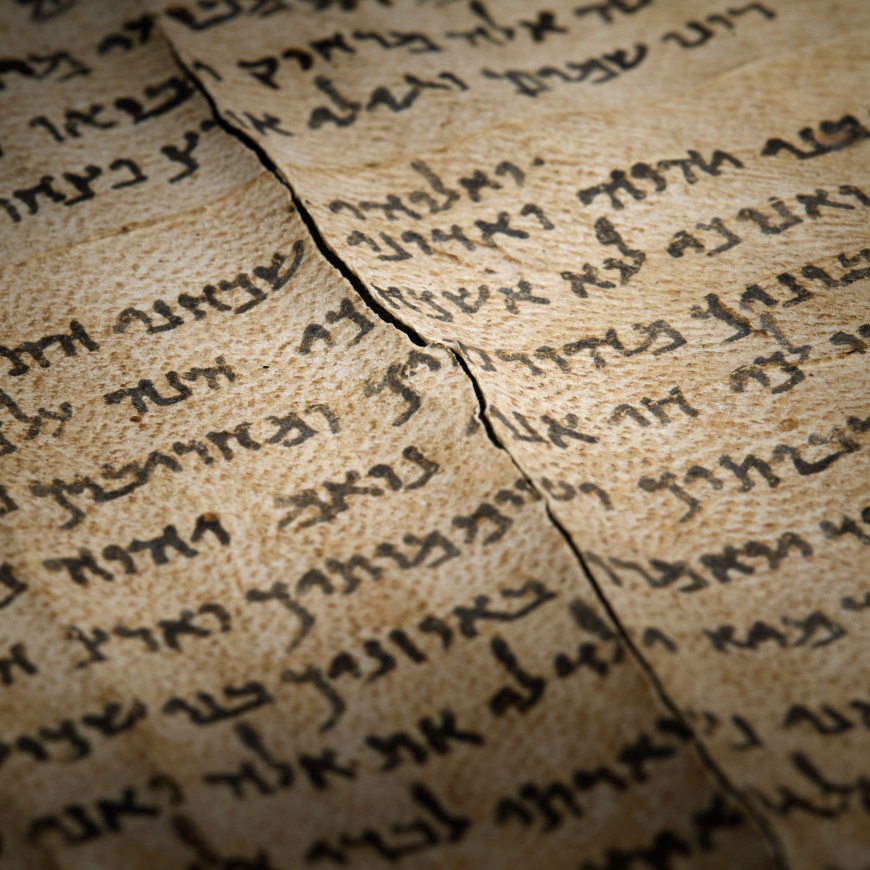
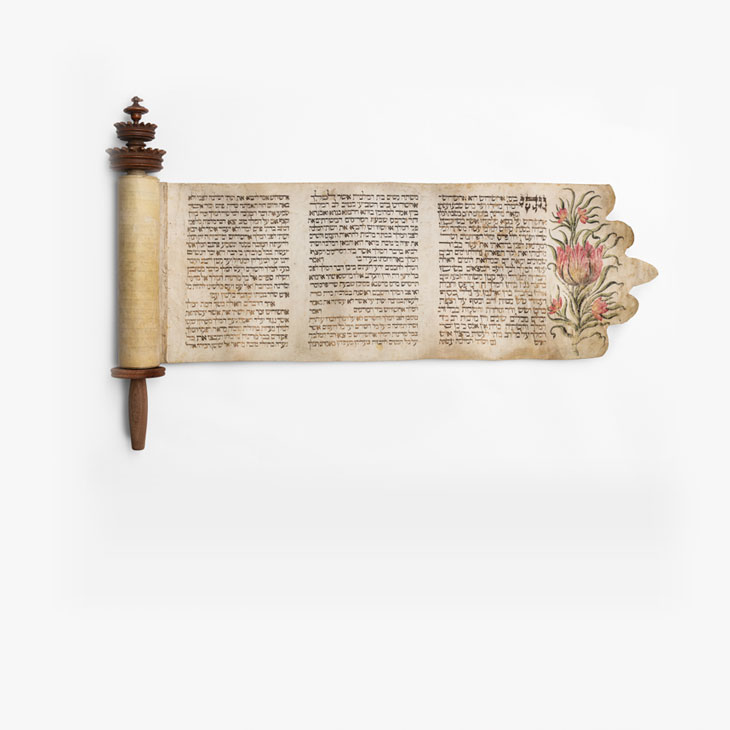
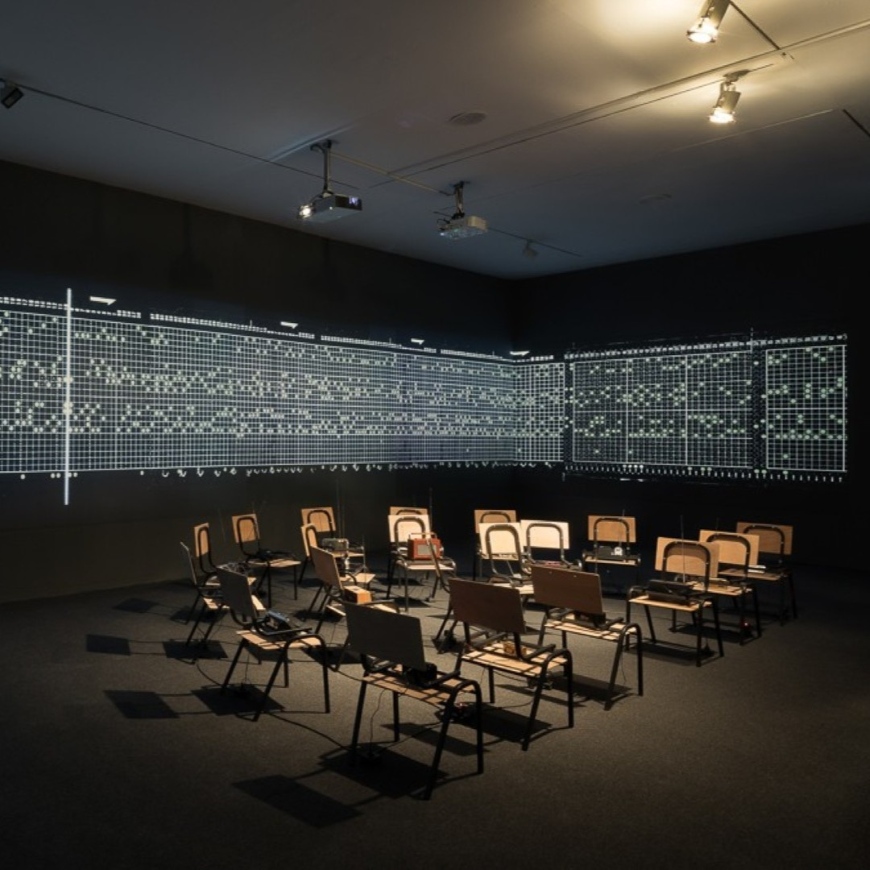
Based on passages from the Hebrew Bible and the Dead Sea Scrolls, Ariel Malka’s three-dimensional animation charts the journey of the People of the Book in a never-ending loop of dynamic micro-calligraphy inspired by medieval Jewish scribal art. The name of the work alludes both to the programing language of the software in which it was compiled (Java) and to the scribal work that took place in a scriptorium. Drawing on a traditional art, this contemporary piece thus offers a fresh way of approaching the ancient texts that form the collection of the Shrine of the Book.
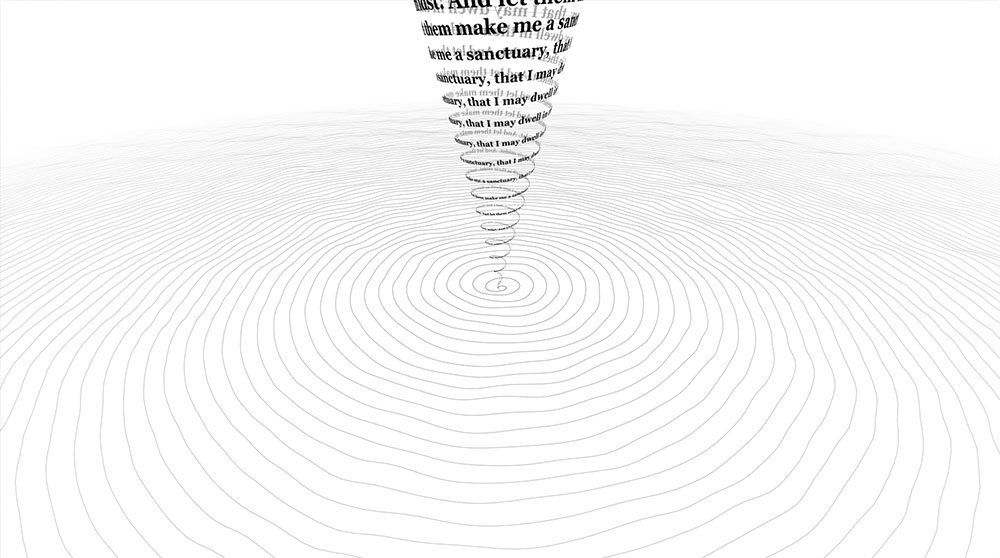
In the first episode of JavaScriptorium, a column of text emerges out of chaotic waters and rises towards the sky – an axis mundi linking heaven and earth. This column, which accompanied the Jews throughout their wanderings in the Sinai desert, is an electronic rendition of the biblical decree “And let them make me a sanctuary, that I may dwell in their midst”(Exodus 25:8). The next scene evokes the return from the Babylonian exile to the Land of Israel, with the narrow column of text – the verse “make straight in the desert a highway for our God” (Isaiah 40:3) – winding its way across the Syrian wilderness. The many columns that fill the screen in the third episode are made of the words “temple of man,” citing one of the Dead Sea scrolls (4Q174) and alluding to the spiritual temple that members of the Qumran sect sought to create in the Judean desert. Quotes from the Community Rule Scroll, describing their voluntary secession from the center in Jerusalem, cover the ground. The work culminates in a final scene representing Ezekiel’s vision of the Water of Life flowing into the Sea of Death – a metaphor of the return to the Garden of Eden.
Custom software, real-time 3D



 May 14May 18May 25May 28Jun 01Jun 04Jun 08Jun 11Jun 15Jun 18Jun 22Jun 25Jun 29
 May 15May 16May 19May 21May 23May 26May 29May 30Jun 02Jun 05Jun 06Jun 09Jun 12Jun 13Jun 16Jun 19Jun 20Jun 23Jun 26Jun 27Jun 30
 May 16May 23May 30Jun 06Jun 13Jun 20Jun 27
 May 18May 25Jun 01Jun 08Jun 15Jun 22Jun 29
 May 18May 25May 28Jun 01Jun 04Jun 08Jun 11Jun 15Jun 18Jun 22Jun 25Jun 29
 Apr 27May 04May 11May 18May 25
 Apr 28May 05May 12May 19May 26
- Apr 28May 05May 12May 19May 26
- May 21May 28Jun 04Jun 11Jun 18Jun 25
- May 21May 28Jun 04Jun 11Jun 18Jun 25