





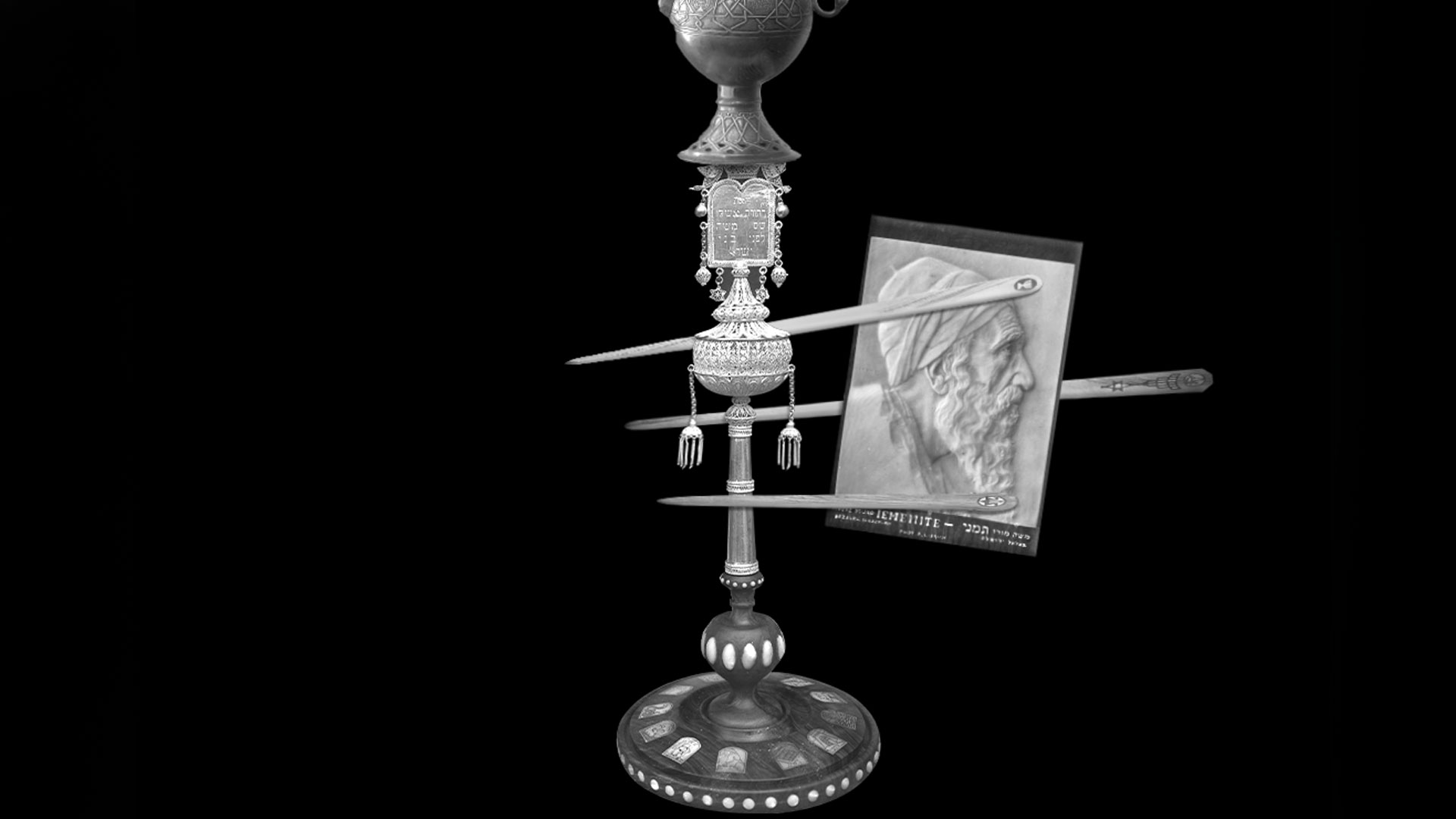


Nevet Yitzhak: Permanent Exhibition
-
 May 10 2025 - March 31 2026
 Curator: Shlomi Navon
-
Designer: Michal Aldor
-
 Hagit Gallery
- Artist: Nevet Yitzhak
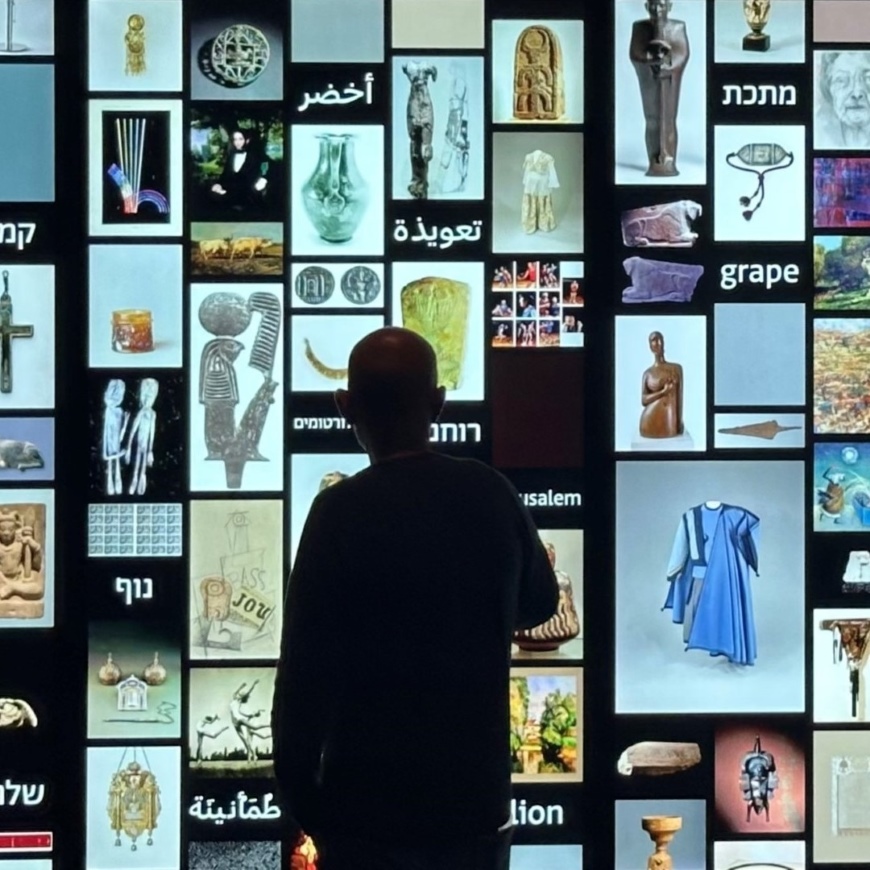
Portraits of “Jewish types,” Hanukkah lamps, smoking candles, and an assortment of shiny metal objects populate the sculptural arrangements featured in Nevet Yitzhak’s video installation. These dynamic “totems,” constructed of pre-existing images, sway slightly around the ivory reliefs of Jewish types, as if animated by a living spirit. The reliefs were created at the Kame’a (amulet) workshop founded in the early twentieth century by artist Moshe Murro as part of the Bezalel School of Arts and Crafts in Jerusalem. The portraits of an Ashkenazi Jew, a Kurdish Jewess, a Yemenite Jew, and other members of different Jewish communities emphasize their distinct visual characteristics and traditional attire, illustrating the racial worldview common at the time.
Nevet Yitzhak (b. 1975) dismantles common cultural representations, critiques their means of construction, and reassembles them, proposing new perspectives on the past. This video installation was part of a more comprehensive exhibition by the artist titled Permanent Exhibition (curated by Sally Haftel Naveh, 2018), so called after the permanent display of the Bezalel National Museum. It was created following research Yitzhak undertook into the collections of the Bezalel National Museum, kept to this day in the storage rooms of the Israel Museum.
By fusing images of Jewish types with Bezalel objects (made in the years 1906–29) containing Jewish and biblical elements and conveying Zionist ideas, the artist proposes “hybrids” of the human and the inanimate. The outcome poses questions regarding the social and political meanings embodied in these objects as carriers of memory, knowledge, and ideology; it also queries the attempt to shape a collective national consciousness through visual culture. The resulting installation is a delicate, precariously balanced monument to Bezalel’s ambitious visual enterprise – a work that offers a critical perspective on the institution’s legacy, emphasizing the fragility and brittleness that accompany contemporary narratives of memory and identity.
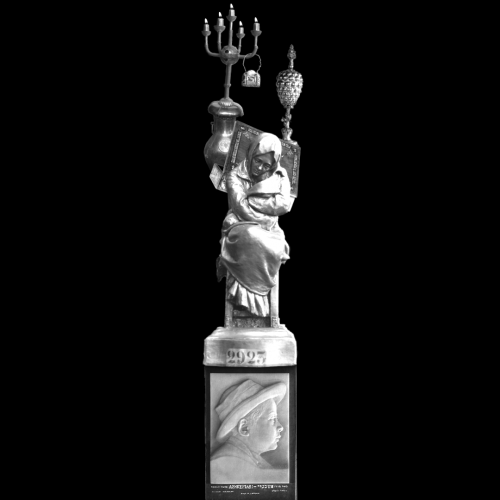
Nevet Yitzhak, Israeli, born 1975
Gallery of Jewish Types, 2018
Video installation: 9 single-channel projections, black-and-white, 1:00 min. each, loop
Purchase, “Here & Now” Contemporary Israeli Art Acquisitions Committee, Israel
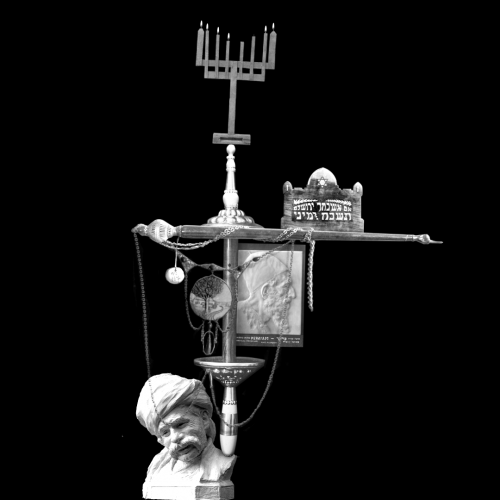
Nevet Yitzhak, Israeli, born 1975
Gallery of Jewish Types, 2018
Video installation: 9 single-channel projections, black-and-white, 1:00 min. each, loop
Purchase, “Here & Now” Contemporary Israeli Art Acquisitions Committee, Israel
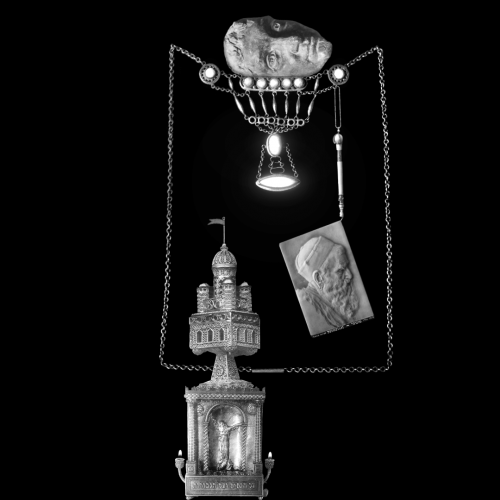
Nevet Yitzhak, Israeli, born 1975
Gallery of Jewish Types, 2018
Video installation: 9 single-channel projections, black-and-white, 1:00 min. each, loop
Purchase, “Here & Now” Contemporary Israeli Art Acquisitions Committee, Israel
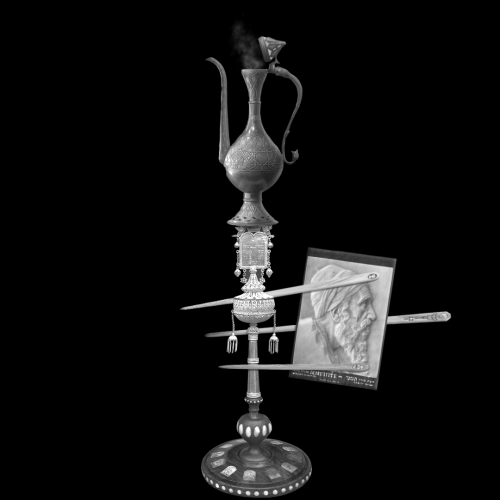
Nevet Yitzhak, Israeli, born 1975
Gallery of Jewish Types, 2018
Video installation: 9 single-channel projections, black-and-white, 1:00 min. each, loop
Purchase, “Here & Now” Contemporary Israeli Art Acquisitions Committee, Israel

 Sep 28Sep 28Sep 30Sep 30
 Sep 27Sep 27Sep 27Sep 28Sep 28Sep 28Sep 29Sep 29Sep 29Sep 30Sep 30Sep 30Oct 01Oct 01Oct 01
 Sep 27Sep 28Sep 29Sep 30Oct 01
 Sep 23Sep 28Sep 30Oct 05Oct 07Oct 12Oct 19Oct 21Oct 26Oct 28
 Sep 23Sep 24Sep 27Sep 28Sep 29Sep 30Oct 01Oct 02Oct 03
 Sep 01Sep 08Sep 15Sep 22Sep 29Sep 29Sep 29
- Sep 27Sep 27Sep 29Sep 29Oct 01Oct 01
 Sep 23Sep 24Sep 27Sep 29Oct 01Oct 05Oct 07Oct 08Oct 12Oct 14Oct 15Oct 19Oct 21Oct 22Oct 26Oct 28Oct 29