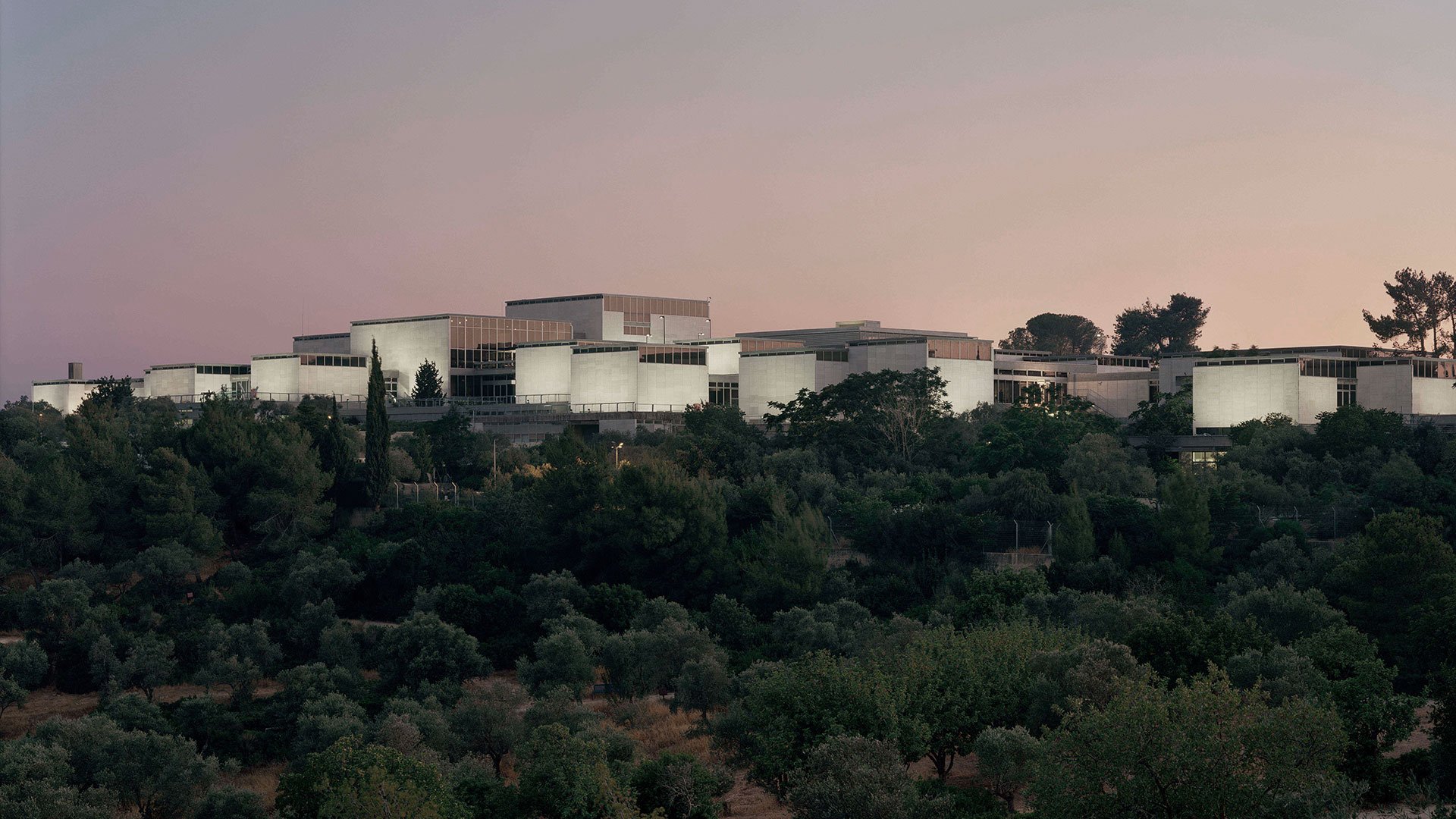


Conserving the Great Isaiah Scroll: What We Know - and What We Still Don’t
 Hasia Rimon ACR
 April 2026
The Great Isaiah Scroll has been studied for nearly eighty years, yet it continues to raise as many questions as it answers. First examined in Jerusalem in 1948, its exquisite yet fragile condition - marked by ancient repairs, losses, and structural weaknesses resulting from long use and age - was already apparent. It was provisionally stabilised for photography, and the images produced at that time continue to shape how we encounter the scroll today.
From the outset, scholars have sought to situate the scroll within its cultural and textual context through its distinctive structural and linguistic features. Questions of where and when it was produced have long been central. Although its precise geographical origin remains uncertain, radiocarbon analysis and palaeographical comparison (the study of ancient writing systems) have enabled increasingly confident dating. Two fragments of the Great Isaiah Scroll were analysed, providing clues to a workshop practice also observed in the Community Rule Scroll, likewise housed in the Shrine of the Book. Even so, fundamental aspects of its manufacture and history remain unresolved.[1]
Recent work undertaken over the past two years, as part of an ongoing conservation project, has demonstrated that even the most basic assumptions require careful reconsideration. The scroll’s overall length, long cited as 7.34 metres, is in fact closer to 7.17 metres, based on my own measurement taken in a straight line across the centre from a tracing (height 26 cm). This discrepancy reflects not only natural shrinkage over time, but also earlier inaccuracies in measurement. Such findings underscore the need to revisit inherited knowledge with care.
[1] Rabin, Ira. “Material Analysis of the Fragments.” In Gleanings from the Caves: Dead Sea Scrolls and Artefacts from the Schøyen Collection, edited by Torleif Elgvin, Kipp Davis, and Michael Langlois, 61–78 (approx.). Library of Second Temple Studies 71. London: Bloomsbury T&T Clark, 2016.
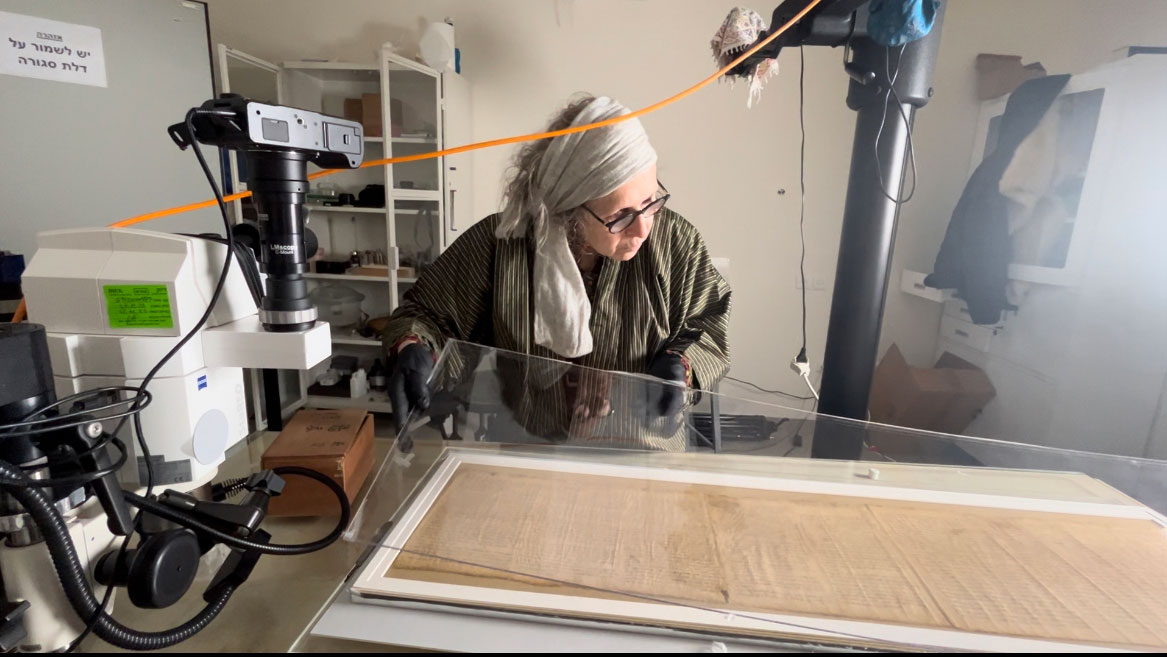
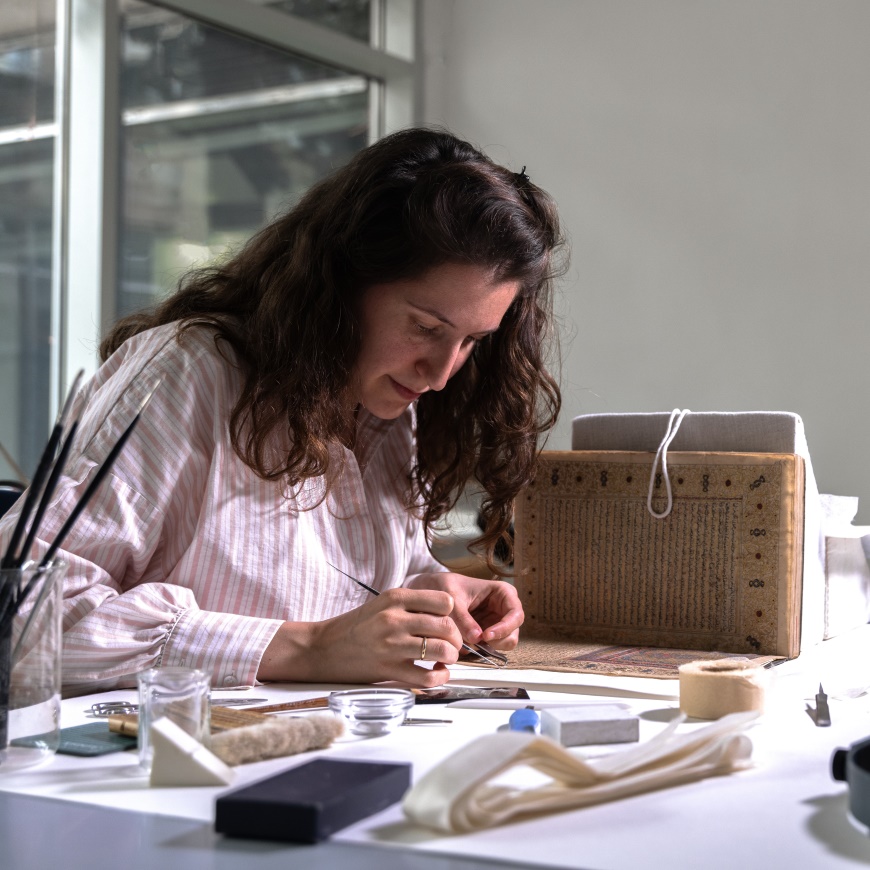
The author in the SHRC Laboratory – First step removing the four scroll portions from the old frames
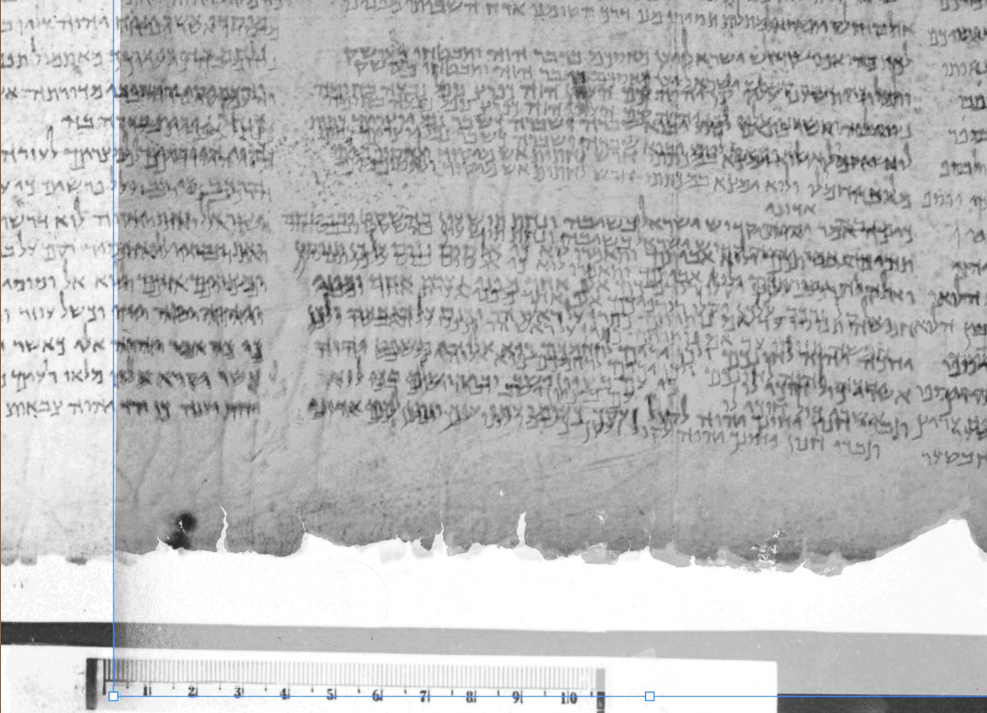
Isaiaha Col 24 lines 20-31- superimposition of SHRC photograph from 2024 on top of Kirschner photograph from 1954 , showing edges shrinking towards the center.
Materially, the scroll comprises seventeen sheets of animal skin, most likely sheep or goat, cut from the flank. The skins preserve subtle traces of their origin—swirling hair patterns and occasional white hairs—which point to a less intensive dehairing process than that employed in later traditions. A notable, and as yet unanalyzed white mineral deposit appears exclusively on the hair side and in places overlies the ink, altering its visual character. Its composition and formation remain unresolved.
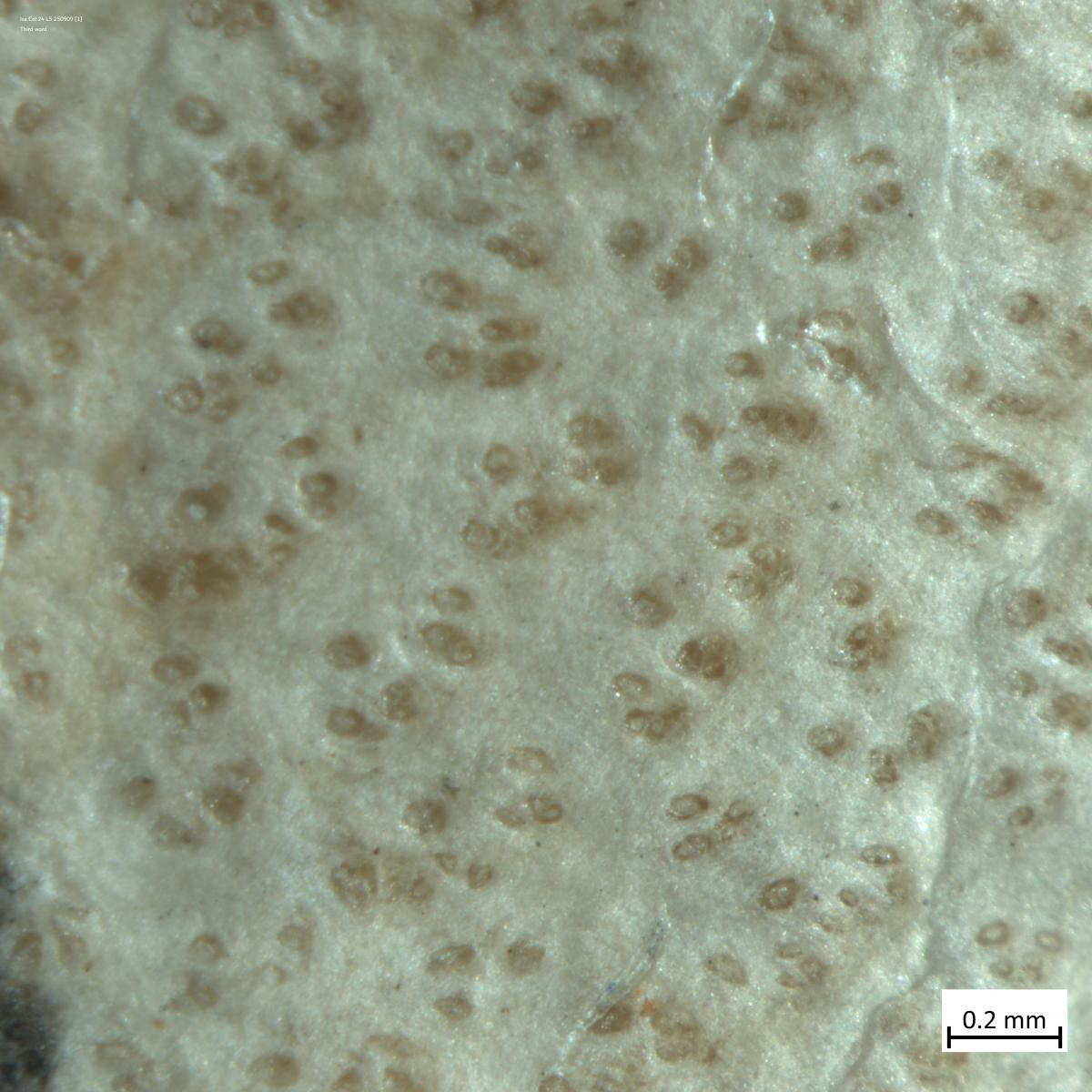
Isaiah Col 24 line 5 - Follicle pattern
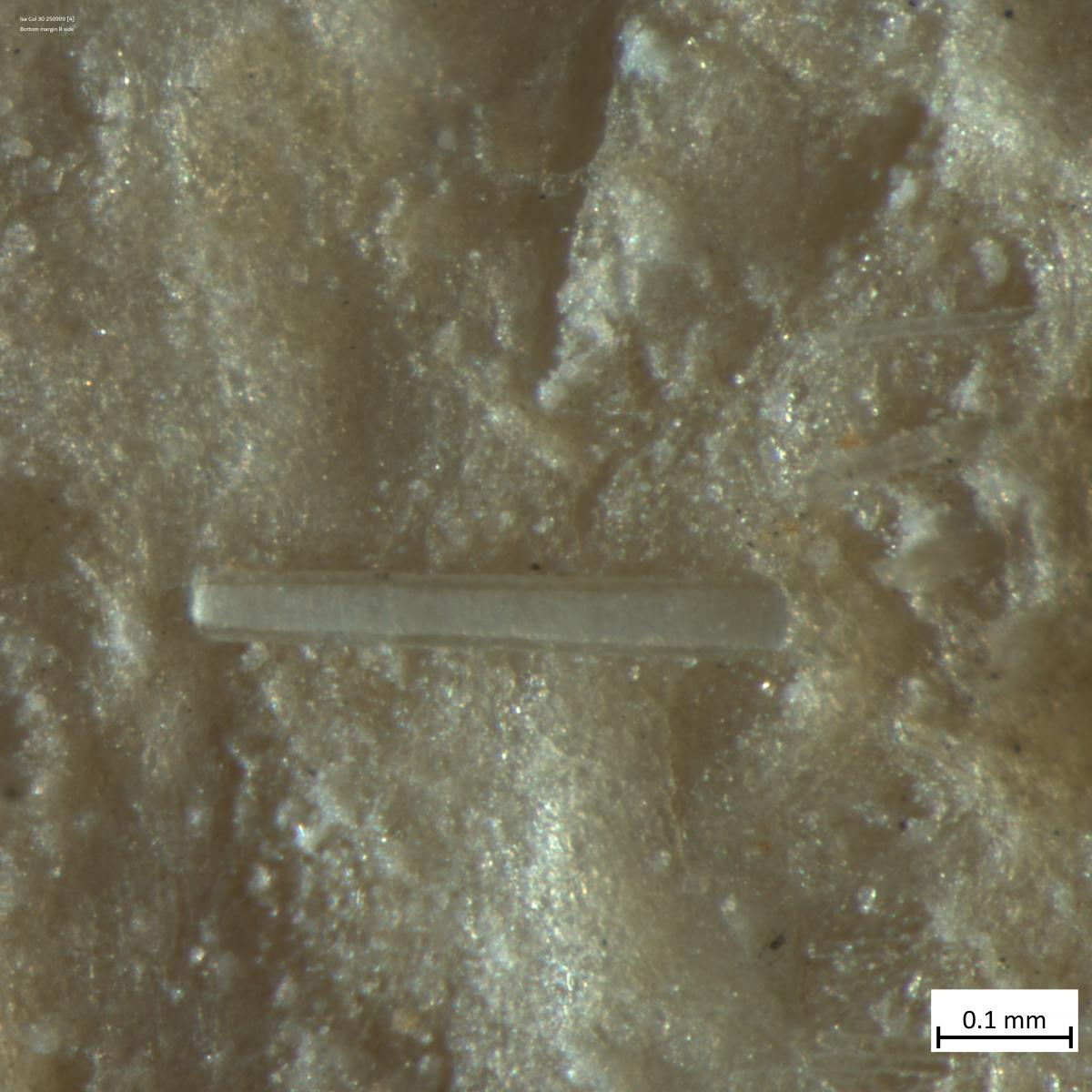
Isaiah Col 30 bottom right edge -A single hair shaft
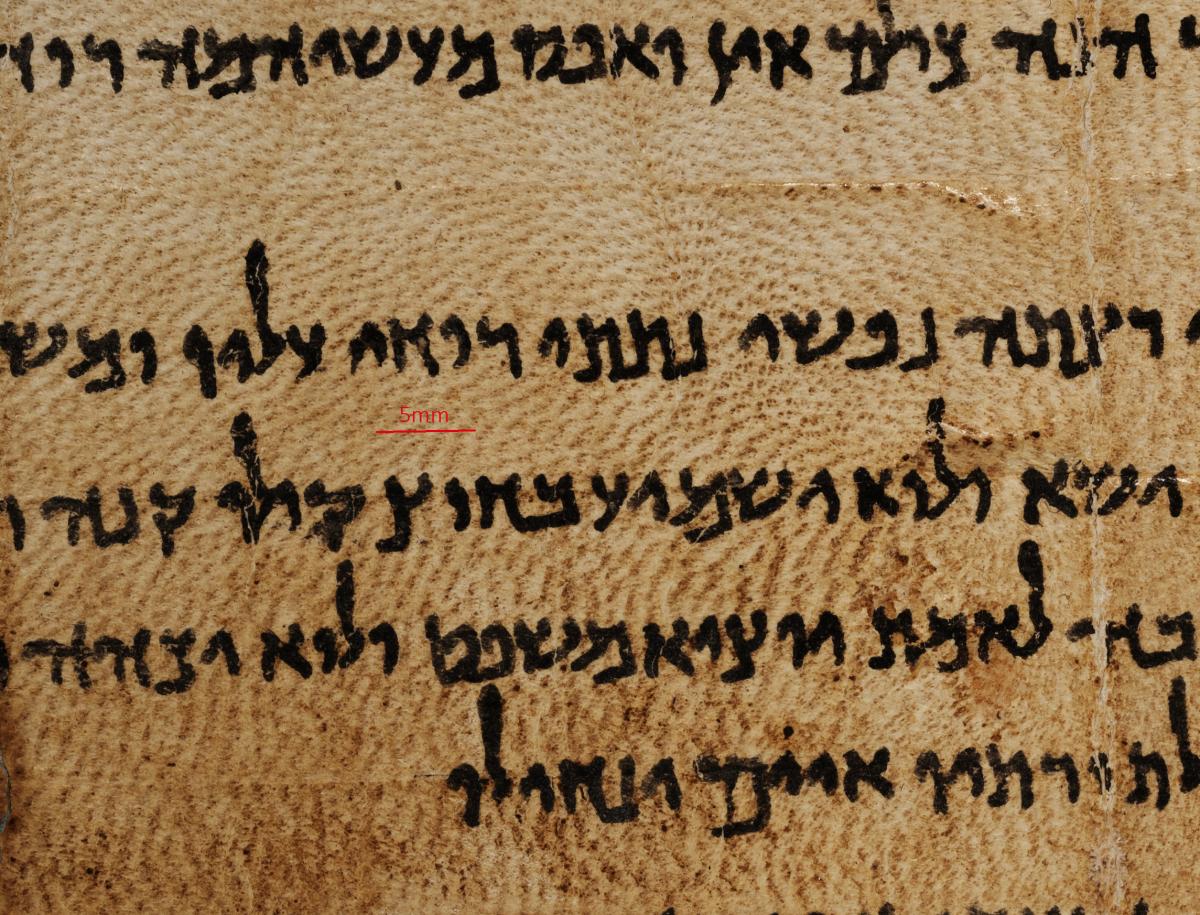
Isaiaha Col 35 Lines 8-13 - Whorling follicle pattern,
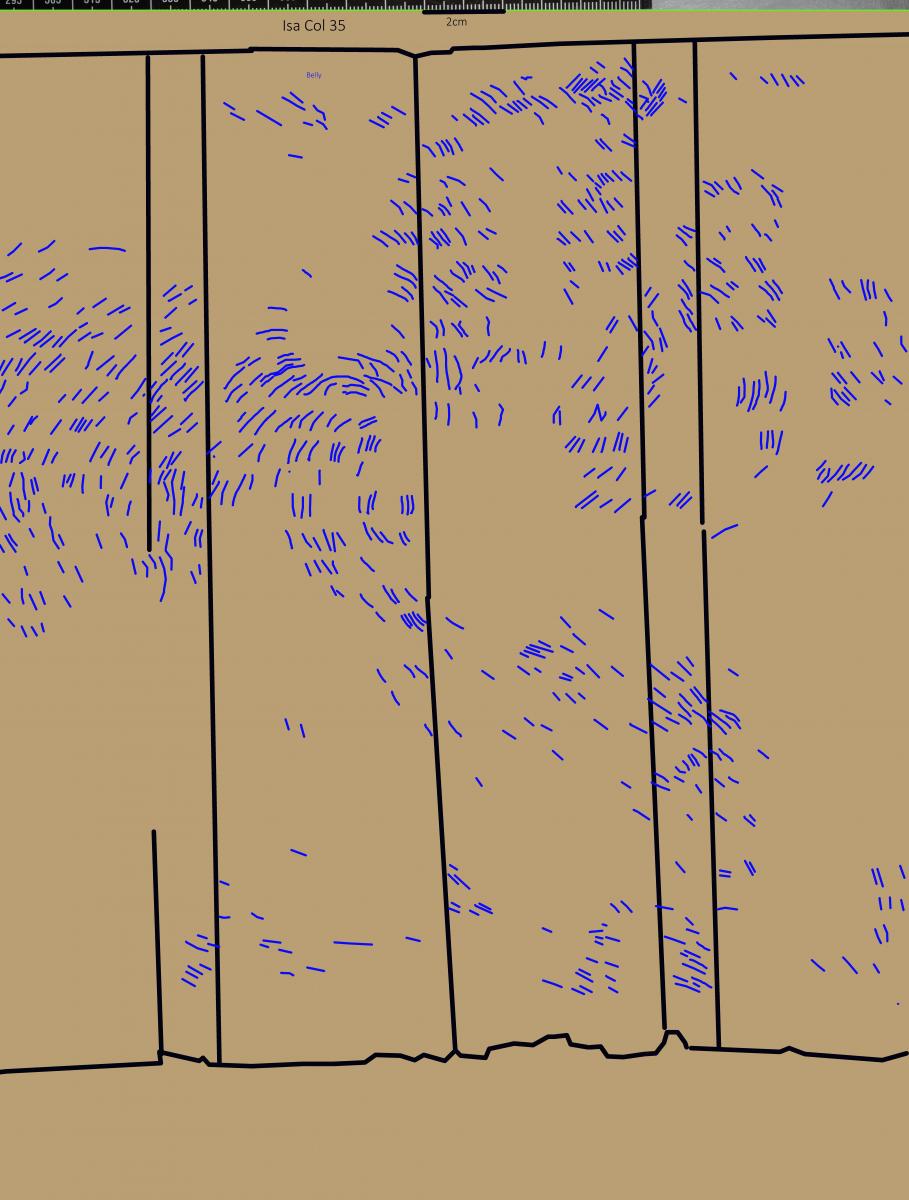
Isaiaha Sheet 11 - Cols 34, 35 36 tracing of follicle pattern. The vertical black paired lines indicate the right and left intercolumnar scored lines marking the boundaries of the text block and the central vertical line represents the fold line dividing the sheet in half.
The reverse presents a markedly different surface. It has developed a smooth, almost gelatinous patina, darkest along the central axis and gradually diminishing towards the edges. There are areas of pristine skin surface that appear to have remained unchanged since the time of inscription. This pattern of alteration in surface decomposition reflects the parchment’s chemical and deformation response to mechanical pressure, as well as its interaction with the ambient microclimate over time. However, the precise mechanisms involved remain insufficiently understood. Visually the scroll exhibits a strong adherence to order and design. Its layout broadly accords with known scribal practices, while also departs from them in subtle but telling ways. Lines are carefully aligned to the right yet frequently disregard the left-hand intercolumnar scored lines. Letters that descend below the writing line occasionally drift, perhaps reflecting moments of fatigue in the scribe’s hand and eye.
Most striking are faint central fold marks—extremely rare among surviving scrolls. These folds predate the sewing of the sheets and point to a stage of handling or preparation that remains obscure. Were the sheets folded for cutting or sewing, for storage, for transport or copying—or for a purpose now lost?
[1]Tov, Emanuel. Scribal Practices and Approaches Reflected in the Texts Found in the Judean Desert. Studies on the Texts of the Desert of Judah 54. Leiden: Brill, 2004.
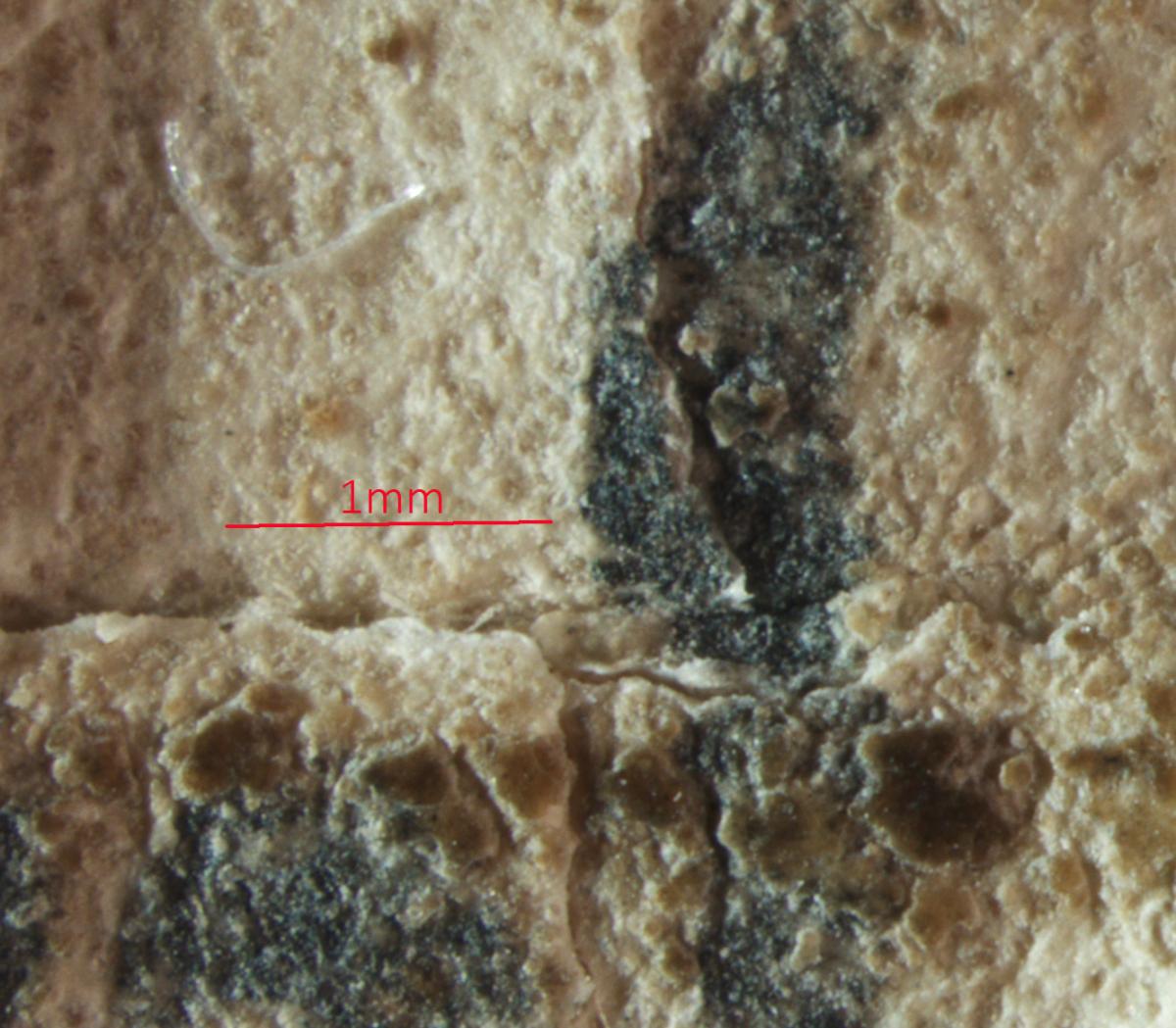
Isaiah a Col 24 Line 16 – Inscribed ink line crossing central horizontal fold. The ink lies within the crevices of the fold rather than skipping over the fold indicating that the skin was inscribed after folding. The dark brown encrustations are gelatinous beads which formed with time along the horizontal fold line dividing the sheet in half.
The modern history of the scroll is equally complex. Since the 1950s, it has been displayed in a variety of ways: initially partially rolled, later suspended vertically, supported first by threads and subsequently by silk netting. Over time, it separated into four sections, of which only the two smaller portions have been exhibited regularly, on rotation.
Only recently, through the present conservation work, has it been possible to examine the scroll in a truly comprehensive manner. A new imaging campaign (2024–2025), undertaken by myself and my assistant, at The Shrine of the Book conservation laboratory (SHRC), as part of this conservation project, has produced over a thousand high-resolution images, including infrared and microscopic views, and—crucially—for the first time—a systematic examination of the reverse. These images are transforming our understanding of the scroll’s condition and structure.
Initial trials undertaken to remove earlier repairs have revealed a layered history of interventions, involving different papers, adhesives, and approaches to conservation. Each bears witness not only to the scroll’s treatment, but to the evolving practice of conservation itself.
Today, caution guides all decisions. The risks associated with display are now better understood, and clear evidence of deterioration has reinforced the need for restraint. The scroll is housed within carefully controlled microclimate cases and subject to continuous monitoring. The aim is not restoration to an idealised state, but the preservation of what survives.
And yet, despite two years of intensive work, the scroll continues to resist complete understanding.
What is the nature of the mineral layer on its surface?
Why do the central folds exist?
How did its collagen structure respond to centuries of sustained pressure?
And what might its remarkable symmetry reveal about its manufacture?
Each answer leads to further questions.
The Great Isaiah Scroll is not a finished story—it remains an ongoing investigation.